
Cutting through the Confusion
Leading with a simpler, more joyful health message
I hope everyone is having a nice holiday.
The topic for this newsletter will likely resonate with many of you, based on what we’ve learned from people attending our immersion events. Many have shared that our community often feels mired in tedious, conflicting, and confusing claims. This is a problem on many levels, including the fact that we can’t successfully promote our healing message to the rest of the world if we are communicating this way. We are no different from any other group trying to motivate others to join them—we need a simple and clear message that will resonate with the people we are speaking to. I discuss this topic in the book I authored with my father, The Whole Truth, which is slated for publication in early June (preorders can be made here), but I’ll touch on this topic briefly here.
Here is a paragraph from our book:
Many of the “expert” voices and influencers in our community confuse people because they see the plant-based diet through a reductionist lens, fixating on its parts so they can prescribe what they see as the ideal form of the diet. For example, we are advised to eat more of certain whole plant-based foods—“superfoods”—because of their supposed nutrient profile, and therefore, to eat less of other foods of supposedly lower nutritional quality. It’s not enough to eat a variety of plant-based foods; now we must go through the tedious process of figuring out which of these foods are better for us than others and somehow adjust our consumption accordingly. We also hear advice to eat certain whole plant-based foods together and conversely to eat other foods separately, to take supplements, to consume an all or mostly raw diet, or if we cook, to cook some foods and not others (like tofu and breads)—the list goes on and on.
I am not suggesting here that we disregard all of this information. There may be times, for example, when a supplement could be helpful, such as a vitamin B12 supplement to compensate for our modern hygienic environment, where we lack access to this natural nutrient, or a small amount of vitamin D when there is little or no access to sunshine. However, most of the time supplements and other nitpicky recommendations about what to eat and not to eat are products of unscientific, reductionist thought.
I can share many examples to make this point, but I’ll focus on just one. I’ll use this one because it involves a class of foods that provides a powerful tool in the toolkit used to prepare delicious plant-based meals. We have all heard people in our community say that we should severely limit or even eliminate from our diet plant-based foods with whole fats, such as nuts, seeds, avocados, and soy. By “whole fats,” I mean fat in its natural form, within a whole food—not the highly processed, unhealthy oils bottled up and sold in our grocery stores. Fortunately, as my father has argued in the past, studies now show conclusively that foods with whole fats, eaten in moderation as Nature presents them, provide impressive health benefits (including prevention of heart disease). The contrary argument is based on a simplistic way of thinking. Again, I’ll use a passage from our book.
The paranoia about whole fats in plant-based foods is reflected in a phrase famous in the plant-based community—“The fat you eat is the fat you wear.” This slogan is just a reincarnation of the same logic used by the dairy industry, who told us to drink milk so we could “wear its calcium” in the form of stronger bones. As my father explained earlier in the book, biology does not work in such a simplistic way. As it turns out, our bones lose calcium when we consume foods high in animal-protein, which makes them more prone to fracture in our later years. Similarly, the fat in plant foods won’t negatively affect your health when eaten in moderation as part of a varied, whole food, plant-based diet. Drawing a line from eating whole plant-based foods with fat to conditions like obesity misses the seemingly infinite biological complexity in between and is just another example of reductionist thought.
This sort of linear thinking can easily lead to conflicting conclusions, which is why we often hear certain advice one day, then opposite advice the next. The resulting confusion, combined with the tedious attention to unimportant details, makes our health message more difficult to share with people in need of healing.
Here is the message Kim and I communicate to the people we work with:
We heal ourselves when we eat a plant-based diet, eating from all parts of the plant, in a rainbow of colors, and infused with flavors that make eating this way joyful. We need not use refined oils, but there’s no problem with small amounts of salt and sweeteners to create flavor; we should not obsess about details that are inconsequential in the context of the whole. We can enjoy our food and tune out the conflicting and tedious messages we hear online and elsewhere, relaxing in the knowledge that we are already doing what matters most for our long-term health.
This science-based definition is simple and clear, while also conveying a sense of joy, which I covered in the last newsletter. I think if we can coalesce around this kind of messaging, we have a much better chance of opening hearts and minds to the healing benefits of plant-based nutrition.
In my next newsletter, I’ll continue this train of thought, where I discuss how we can expand our messaging beyond health to appeal to more people, especially young people.
Until then,
Nelson
PS: If you found this helpful, please tap the ❤️ below and share this post with a friend. Your likes and shares help Substack promote our work to new readers.
We also encourage you to consider upgrading to a paid subscription. Paid subscribers receive more in-depth articles and an eBook each month featuring 5-8 new recipes from Kim – and your support will help sustain this publication.
Chinese Dumplings, by Kim Campbell
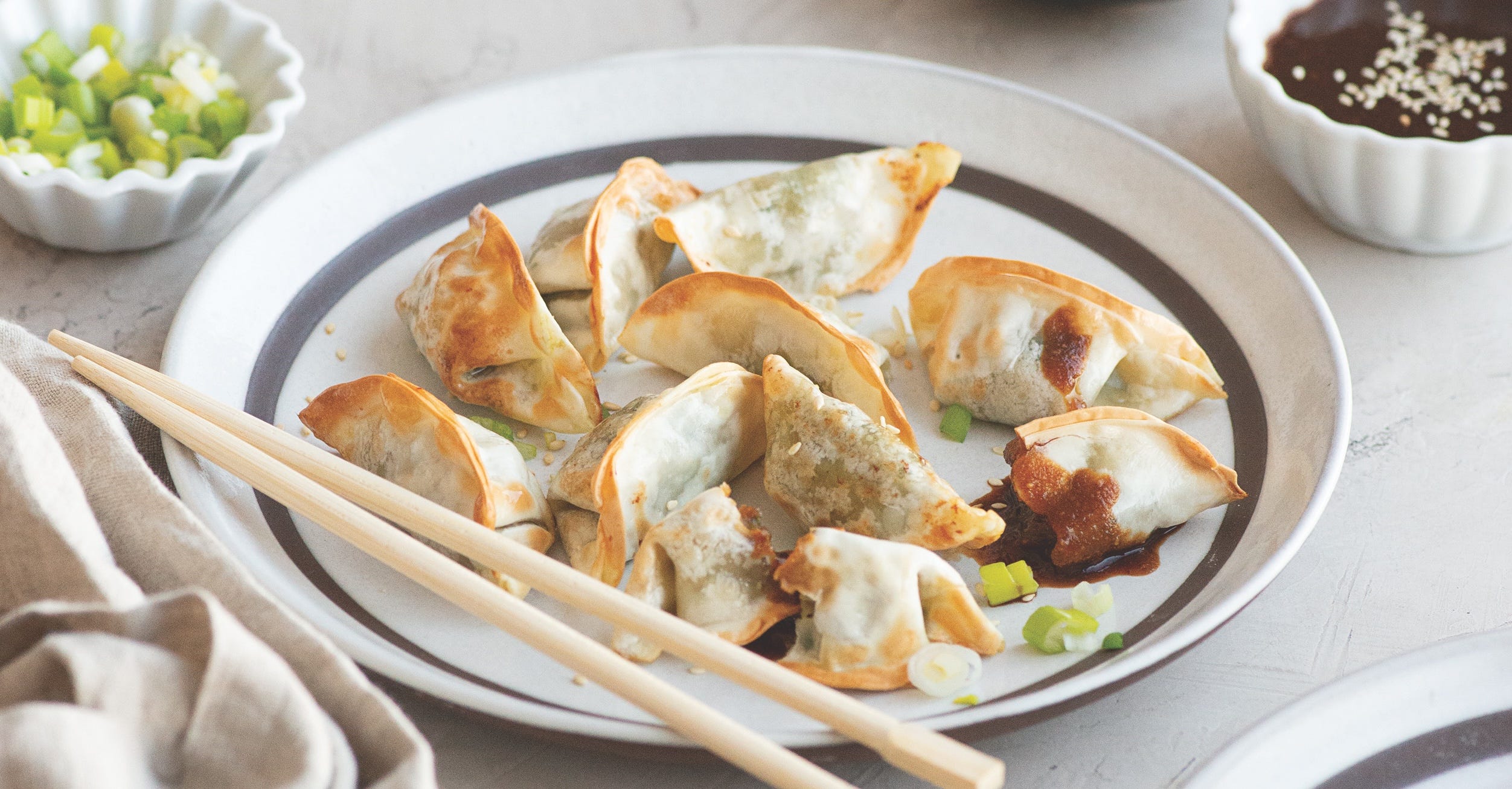
One of my favorite New Year rituals comes from Chinese culture: making dumplings.
In northern China, dumplings, or jiaozi, are an important part of Lunar New Year celebrations. The word jiaozi itself refers to a transition, the crossing from one time period into another. Traditionally, dumplings are eaten around midnight on New Year’s Eve, right as the old year gives way to the new. It’s a way of honoring the in-between moment.
Their shape tells another part of the story. Dumplings are folded to resemble ancient Chinese silver ingots, once used as currency. Serving them at the New Year symbolizes hopes for prosperity, stability, and abundance in the year ahead. In some families, a coin was tucked into one dumpling, and whoever found it was said to have extra luck. Today, that practice is often symbolic, but the intention remains the same, which means wishing well for one another.
What I love most about this tradition is that dumplings are rarely made alone. They’re a communal food. People gather around the table to roll, fill, fold, and talk. Children learn by watching. Elders guide by example. No one expects perfection. Every dumpling looks a little different, and that’s part of the beauty.
This kind of cooking feels especially meaningful at the start of a new year—spending time with the ones we love.
Here is your recipe for Chinese Vegan Dumplings: https://plantpurecommunities.org/recipes/chinese-style-vegan-dumplings-2/
I hope you all have a wonderful New Year!
Kim
Amen, Nelson! As your father points out, and I love to remind people, reductionism is not only epistemologically damaging, reducing our understanding of the larger picture and the bigger and more essential truths, it is also highly profitable, especially for specialized interests - all across the board - food, medicine, economics, politics, etc. Wholism heals. Whole, organic, plant-sourced foods provide the terrific foundation for radiant health, which, personally for Madeleine and me, after 45 years of vegan living and also traveling extensively and delivering over 4,000 presentations promoting vegan living, we continually see validated. The path to a positive future for humanity and all beings is plainly laid out for us and it is, as you say, simple and joyful and liberating.
Regarding the quote from your book:
"The paranoia about whole fats in plant-based foods is reflected in a phrase famous in the plant-based community ...
'The fat you eat is the fat you wear.' This slogan is just a reincarnation of the same logic used by the dairy industry, who told us to drink milk so we could “wear its calcium” in the form of stronger bones."
My understanding of this expression is primarily in the context of processed foods with added oil and animal foods (meat and dairy).
And yes, some plant foods are naturally high in fat ... which calorically, people like me need to limit. I feel your comment on this has been taken out of context and is disparaging.
For sure, your insights on our PB "community" in general is so true: Why do we get so hung up in arguments and why not be more constructive? I think it's our passion for a healthy world - which for that needs collaboration?